
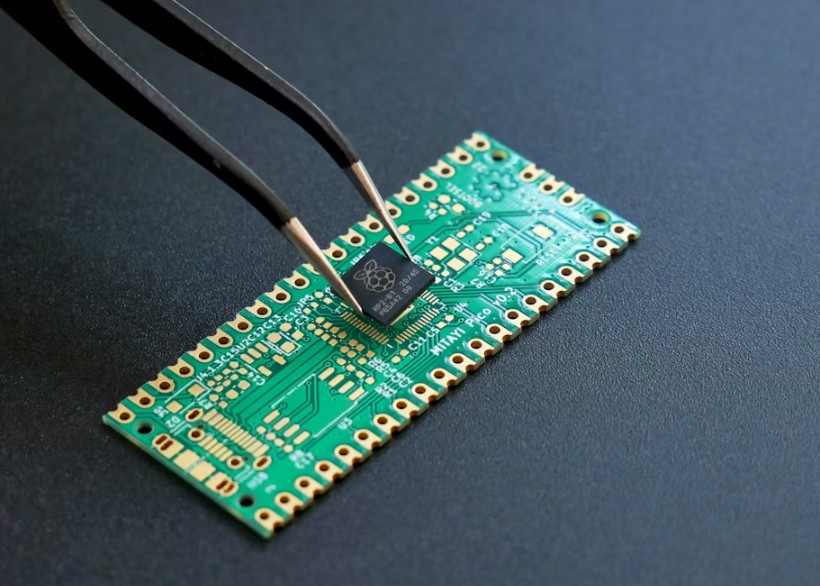
A close-up view of a semiconductor chip symbolizing the core technology behind modern computing, AI systems, and global tech infrastructure driven by companies like TSMC, Nvidia, and Apple.
TSMC’s 2026 Semiconductor Dominance: Why Advanced Chip Manufacturing Is Becoming the Core of Global Tech Power
Meta Description: Explore how TSMC’s semiconductor dominance in 2026 is shaping global technology power through advanced chip manufacturing, AI demand, and geopolitical supply chain shifts.
Focus Keyword: TSMC Semiconductor 2026
In 2026, the global technology industry is increasingly defined not by software alone, but by the physical limits of semiconductor manufacturing. At the center of this transformation stands TSMC, the world’s most advanced contract chip manufacturer. As demand for high-performance computing continues to surge, especially from AI, cloud computing, and mobile devices, semiconductor production has become a strategic asset rather than a purely industrial process.
TSMC’s role in the global supply chain has expanded significantly as companies like Apple, Nvidia, AMD, and Qualcomm rely heavily on its advanced fabrication capabilities. This concentration of technological power in a single manufacturer has raised both opportunities for innovation and concerns about supply chain resilience and geopolitical risk.
TSMC Semiconductor 2026 and the Rise of Advanced Chip Manufacturing
The TSMC Semiconductor 2026 landscape is defined by rapid advances in process nodes, particularly in sub-3-nanometer chip production. These next-generation chips enable higher performance and energy efficiency, which are essential for AI workloads, mobile processors, and data center infrastructure. As computational demands increase, traditional chip architectures are reaching physical and economic limits, making advanced manufacturing nodes more critical than ever.
TSMC has maintained its leadership position through continuous investment in fabrication technology and large-scale production capacity. Its ability to deliver cutting-edge chips at scale has positioned it as a foundational partner for the world’s largest technology companies. Nvidia’s AI accelerators, Apple’s mobile processors, and AMD’s high-performance computing chips all depend on TSMC’s manufacturing ecosystem.
However, this dominance also highlights a structural vulnerability in the global semiconductor supply chain. The concentration of advanced chip manufacturing in Taiwan has prompted governments and corporations to diversify production through new fabrication plants in the United States, Japan, and Europe. Despite these efforts, replicating TSMC’s technological expertise and efficiency remains a significant challenge.
TSMC Semiconductor 2026 and Its Impact on Global Technology Markets
The influence of TSMC Semiconductor 2026 extends far beyond the semiconductor industry itself. Its production capabilities directly affect the pace of innovation in artificial intelligence, consumer electronics, automotive systems, and cloud computing infrastructure. When chip supply is constrained, entire industries experience delays in product launches and scaling efforts.
For big tech companies, access to TSMC’s advanced manufacturing capacity has become a competitive advantage. Firms that secure early access to cutting-edge chip production are better positioned to deliver faster, more efficient products to market. This dynamic has intensified competition among global technology leaders and increased long-term strategic partnerships with semiconductor manufacturers.
At the same time, geopolitical tensions continue to influence semiconductor supply chains. Governments are increasingly treating chip production as a national security issue, leading to subsidies, export controls, and domestic manufacturing initiatives. These policies are reshaping global trade flows and encouraging regionalization of semiconductor ecosystems.
TSMC Semiconductor 2026 and Future Opportunities for the Global Economy
Looking ahead, TSMC Semiconductor 2026 represents both an opportunity and a constraint for the global economy. On one hand, continued innovation in chip manufacturing will enable breakthroughs in artificial intelligence, autonomous systems, and high-performance computing. On the other hand, reliance on a limited number of advanced fabrication facilities introduces systemic risk into global supply chains.
Companies investing in semiconductor research, packaging technologies, and alternative materials may benefit from the next phase of industry growth. At the same time, governments and enterprises are expected to continue investing heavily in domestic semiconductor capacity to reduce dependency and improve resilience.
Despite these challenges, TSMC remains a central pillar of the global technology ecosystem. Its ability to push the boundaries of semiconductor engineering will likely determine the speed at which future technologies are developed and deployed across industries worldwide.
Frequently Asked Questions
Why is TSMC so important in the semiconductor industry in 2026?
TSMC is critical because it produces the world’s most advanced semiconductor chips used in AI systems, smartphones, and high-performance computing. Its manufacturing capabilities enable companies like Apple and Nvidia to deliver cutting-edge products, making it a central player in the global technology supply chain.
How does TSMC influence global technology companies?
TSMC directly impacts the performance and release cycles of major technology companies by providing access to advanced chip fabrication. Companies that secure production capacity gain a competitive advantage in launching faster and more efficient devices and AI systems.
What are the risks associated with TSMC’s dominance?
The main risks include supply chain concentration in a single geographic region and geopolitical tensions that could disrupt production. These factors have encouraged governments and companies to diversify semiconductor manufacturing, although replicating TSMC’s scale and expertise remains difficult.