
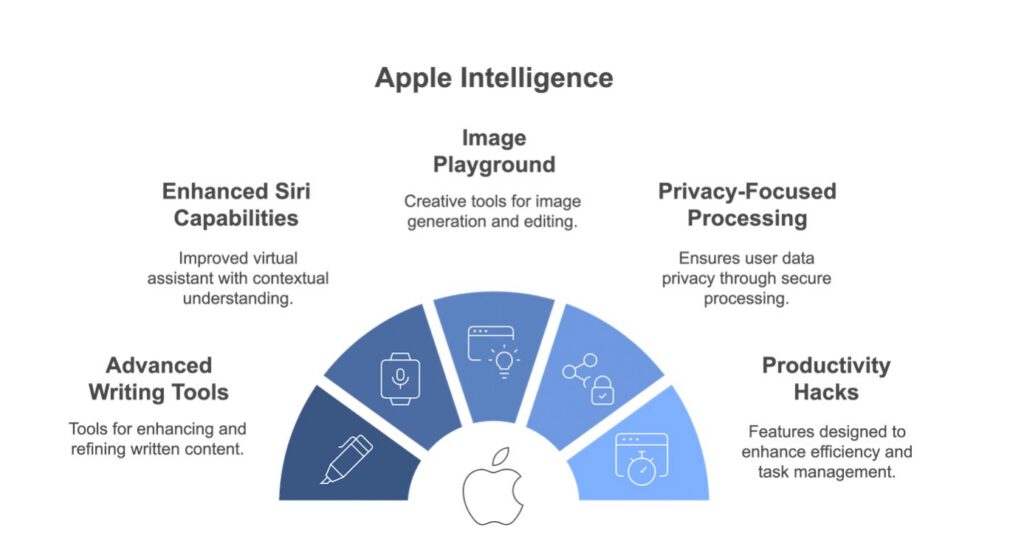
Apple Intelligence introduces advanced AI features to streamline business workflows.
Meta Description: Discover how Apple is leveraging artificial intelligence to enhance productivity features in its software lineup and what this means for businesses.
Focus Keyword: Apple AI Productivity
In a bold move to reinforce its position in the enterprise software market, Apple has unveiled significant enhancements to its productivity tools powered by artificial intelligence. The recent announcements, made during the company’s latest product reveal, shed light on how Apple is tapping into AI technology to streamline processes and enhance user experience within its suite of applications. As businesses increasingly look for innovative solutions to improve efficiency, Apple’s latest AI-driven features mark a key development in the competitive technology landscape.
The introduction of AI into Apple’s productivity software is not merely an upgrade; it represents a transformative initiative aimed at addressing the unique challenges faced by business users. Increased reliance on remote work, coupled with the demand for efficient workflow management, has pushed companies to seek solutions that combine functionality with ease of use. By infusing AI into applications such as Pages, Numbers, and Keynote, Apple is demonstrating its commitment to facilitating higher productivity levels among its user base.
Current Developments
Recently, during its annual Worldwide Developers Conference (WWDC), Apple introduced a range of new features crafted specifically for business applications. One of the standout innovations is the AI-driven automation capabilities integrated into Keynote. This development allows users to generate presentation suggestions and layouts based on content, significantly reducing the time spent on design choices. Additionally, Numbers now includes an AI feature that analyzes data trends and offers insights, thereby simplifying the decision-making process for business professionals.
Furthermore, Apple is incorporating Machine Learning (ML) techniques into Pages, which will enable real-time grammar and style suggestions as users write. This feature is primarily aimed at enhancing written communication within corporate environments, allowing for quicker edits and improved document quality. Companies like Slack have already recognized the potential of such integrations, stating that they could radically change how teams communicate and collaborate.
Industry analysts indicate that these announcements position Apple as a formidable competitor in the productivity software sector, often dominated by Microsoft Office. By leveraging its ecosystem—the seamless integration across devices and platforms—Apple aims to create a robust solution for corporate users that ties together hardware and software in a way that maximizes productivity.
Market Impact
The introduction of Apple’s AI-powered tools comes at a time when businesses are under pressure to evolve quickly in a rapidly changing economic landscape. The global shift toward hybrid and remote work has created a pressing need for tools that enhance collaboration and efficiency regardless of location. By investing in AI, Apple is signaling its recognition of these challenges and striving to meet the demands of modern workplaces.
Market analysts predict that the integration of AI into productivity features can significantly influence purchasing decisions. Companies evaluating software solutions are likely to prioritize innovative capabilities that enhance employee productivity and foster better collaboration. Apple’s latest offerings may sway users who were previously loyal to competitors.
Moreover, the potential for these AI features to collect user data raises important considerations related to privacy and security. Apple has a consistent ethos of prioritizing user privacy, and how it navigates these complexities while updating its productivity software will undoubtedly impact user trust and market perception.
Future Outlook
Looking ahead, Apple’s commitment to incorporating AI into its productivity software is expected to evolve further, exploring advanced features such as predictive analytics and intelligent task management. Experts speculate that future updates may not only look to enhance workplace productivity but also to create more personalized user experiences that adapt to individual workflows and preferences.
However, the reliance on AI also comes with inherent risks. The potential for AI biases, data breaches, and dependency on technology could lead to setbacks if not managed effectively. Companies will need to strike a balance between harnessing the power of technology and maintaining robust risks mitigation strategies.
Moreover, as competition continues to intensify, it will be essential for Apple to differentiate its offerings continually. Feedback from early adopters will play a crucial role in shaping future features and ensuring that Apple meets the evolving needs of its business clientele.
Frequently Asked Questions
What new AI features has Apple introduced for business users?
Apple recently rolled out AI-driven automation capabilities in Keynote, which provide design suggestions based on content, as well as data analytics features in Numbers that help identify trends. Pages now benefits from real-time grammar and style suggestions through machine learning, catering specifically to the needs of business professionals.
How does Apple’s AI initiative compare to competitors like Microsoft?
Apple aims to differentiate itself by integrating its AI features across its ecosystem seamlessly. While Microsoft Office has been the dominant player in the enterprise software market for years, Apple’s recent advances seek to attract users by enhancing productivity and collaboration through innovative AI capabilities.
What risks are associated with the integration of AI in business productivity tools?
Integrating AI into productivity software introduces risks such as data privacy concerns and potential biases in AI algorithms. As businesses increasingly rely on AI tools, they must implement strong security measures and develop a clear understanding of how data is used and protected to maintain user trust.