
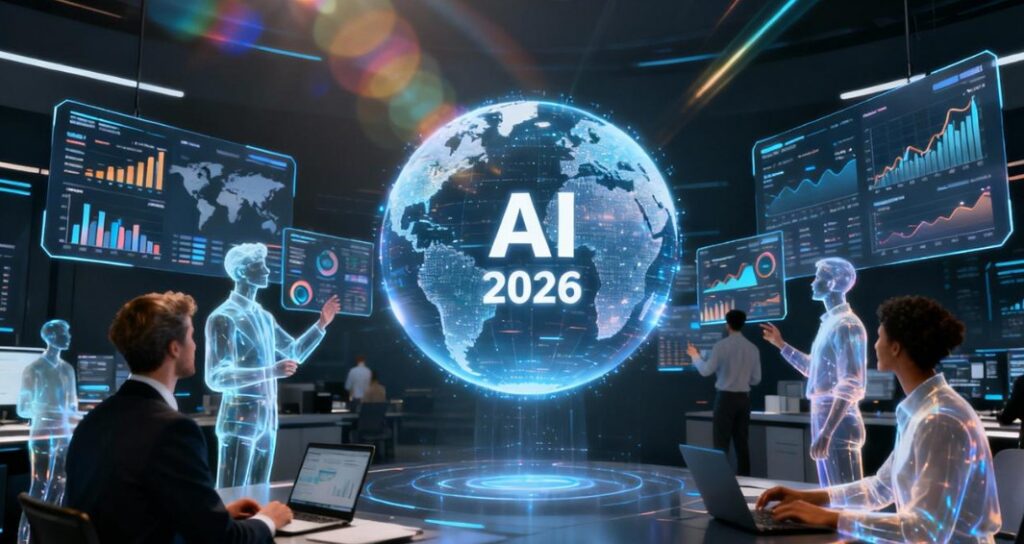
Generative AI is reshaping technology industries and driving new opportunities across business, innovation, and investment trends in 2026.
Meta Description: Explore the rise of generative AI in 2026 and its impact on tech industries, investment trends, and future innovation opportunities.
Focus Keyword: generative AI
As we dive deeper into 2026, generative AI continues to capture headlines, reshaping various tech industries and driving significant investment trends. This cutting-edge technology is no longer just a concept but a reality that businesses are leveraging to enhance productivity and creativity. The urgency to understand and adapt to generative AI is paramount, as it revolutionizes traditional paradigms, enabling organizations to innovate at unprecedented speeds.
With tech giants and startups alike launching new generative AI applications, it’s essential to grasp how this technology is influencing market dynamics. From content creation to software development, generative AI is spearheading a transformation that shapes the future of technology. In this article, we’ll explore the latest developments, their implications for industries, and what they mean for investors seeking opportunities in a rapidly evolving landscape.
Generative AI Advances in 2026 and Their Current Industry Applications
The generative AI landscape in 2026 is marked by pioneering strides in technology and application. Companies like OpenAI and Google are leading the charge with sophisticated models that can generate human-like text, art, and even music. For instance, OpenAI’s GPT models are being employed across sectors—from entertainment to journalism—showcasing their versatility and practical value.
In the creative industries, generative AI is transforming workflows. Designers now utilize AI tools to create innovative visual content efficiently, while writers leverage AI for brainstorming and drafting purposes. One standout example is an art collective that uses AI to generate unique installations, marrying technology with traditional art forms.
Moreover, industries such as healthcare are adopting generative AI for predictive analysis, enhancing diagnostics, and even personalizing patient care. These advancements not only streamline processes but also bolster innovation, illustrating why understanding generative AI is crucial for businesses aiming to maintain competitive advantages.
The Impact of Generative AI on Global Markets and Investment Trends
As 2026 progresses, the economic implications of generative AI cannot be overlooked. Its integration into various sectors is leading to market expansions and attracting substantial investments. Venture capitalists are increasingly interested in startups focused on generative AI technologies, reflecting a growing belief in their potential to revolutionize existing models.
Tech stocks are showing significant movements, with companies like Nvidia witnessing a surge in their market value due to their critical role in AI hardware and software development. This trend signals to investors that generative AI is not just a fleeting trend but a foundational technology set to redefine market structures.
It’s essential to recognize that with these opportunities come considerable risks. The rapid evolution of generative AI raises ethical concerns, notably regarding content authenticity and the potential for misuse. Investors must navigate these challenges carefully while seizing the benefits that generative AI presents.
Future Projections: Generative AI’s Role in Shaping Investment Strategies
The future of generative AI appears bright, with further advancements anticipated by 2028. As the technology matures, it is likely to create entirely new markets and sectors. For investors, this evolution signifies the importance of aligning portfolios with companies focused on responsible AI development and innovative applications.
Companies prioritizing ethical considerations in their AI initiatives could attract more consumers and investors who are conscious of these issues. Additionally, as generative AI tools become more accessible, smaller firms may enter the market, creating diverse investment opportunities.
Potential applications such as AI-driven personalized marketing strategies and automated customer service solutions are on the horizon, illustrating the technology’s capacity to drive revenue growth. Investors and stakeholders must closely monitor these developments, ensuring they capitalize on the impending changes and innovations brought forth by generative AI.
Frequently Asked Questions
What is generative AI and how is it used in 2026?
Generative AI refers to algorithms that can create new content, ranging from text and images to music. In 2026, businesses are leveraging generative AI to enhance creative processes, improve efficiencies, and drive innovation across diverse sectors, including art, healthcare, and marketing.
How are tech companies investing in generative AI?
Tech companies are significantly investing in generative AI by developing proprietary models and applications. This includes funding startups innovating in this space and integrating AI technologies into their product offerings, thereby enhancing their market reach and staying competitive.
What are the ethical concerns surrounding generative AI?
The rise of generative AI brings ethical challenges such as content authenticity, copyright issues, and potential misuse of AI-generated material. Companies are increasingly focusing on responsible AI practices to mitigate these risks while maximizing benefits in their applications.