
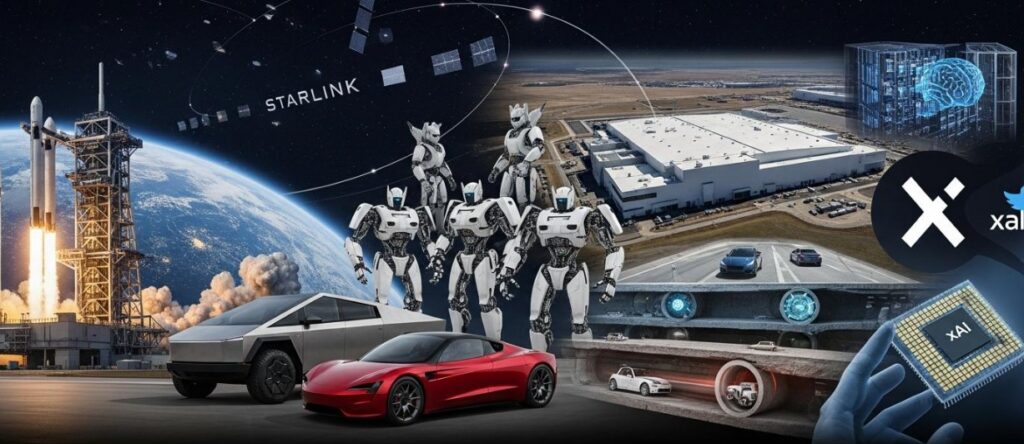
Tesla’s evolving AI strategy, energy storage expansion, and future mobility vision are reshaping the global technology and automotive landscape.
Introduction
The latest financial developments and strategic moves from Tesla, SpaceX, Palantir, SK hynix and Samsung Electronics highlight a significant shift taking place across the global technology landscape.
While Tesla continues to expand beyond electric vehicles through its energy business, SpaceX is accelerating its position in space infrastructure. At the same time, Palantir is strengthening its role in artificial intelligence platforms, while South Korea’s leading semiconductor companies are positioning themselves for the next phase of AI-driven demand.
These developments are not simply individual company stories. They reflect a wider transformation in global industries, where artificial intelligence, energy infrastructure, semiconductor technology and advanced computing are becoming increasingly connected.
Tesla’s Record Revenue Growth and Expansion Beyond Electric Vehicles
Tesla has recently attracted market attention after reporting quarterly revenue of approximately $28.24 billion, exceeding analysts’ expectations. The result demonstrates that the company continues to maintain strong revenue generation despite challenges surrounding vehicle margins and increasing competition in the electric vehicle sector.
One of the most important developments is the rapid expansion of Tesla’s energy storage business. Deployment of energy storage systems, including Megapack and Powerwall products, has increased significantly, suggesting that Tesla’s future growth strategy is becoming broader than traditional vehicle manufacturing.
The importance of this shift lies in the changing global energy environment. As artificial intelligence data centres require increasingly large amounts of electricity, energy storage solutions are becoming a critical part of modern infrastructure. Tesla’s ability to combine software, energy management and hardware could become an important competitive advantage.
For investors, the key point is not only Tesla’s vehicle delivery numbers, but also whether its energy division and software ecosystem can become meaningful long-term growth drivers.
SpaceX and the Next Stage of Commercial Space Innovation
SpaceX continues to push the boundaries of the commercial space industry through its Starship programme and Starlink satellite network. Although the latest Starship test flight was delayed due to weather conditions, the mission remains an important milestone in the company’s long-term strategy.
The upgraded Starship platform represents SpaceX’s ambition to create a more powerful and reusable space transportation system. Reusability remains a key factor because it has the potential to reduce launch costs and expand opportunities across satellite deployment, scientific missions and future space-based services.
Beyond rockets, Starlink has become an increasingly important business pillar for SpaceX. The satellite internet service is expanding globally and creating a recurring revenue model that supports the company’s wider space ambitions.
For the global technology market, SpaceX represents a different type of growth story, combining aerospace engineering, communications infrastructure and defence-related opportunities.
Palantir’s AI Platform Strategy and Enterprise Growth Potential
Palantir has emerged as one of the companies receiving significant attention during the global artificial intelligence expansion. Its Artificial Intelligence Platform (AIP) is designed to help organisations apply AI technology to real-world operational challenges.
The company’s strength comes from its experience working with government agencies, defence organisations and large enterprises that require secure and reliable data management systems. Recent strategic partnerships and government-related projects have reinforced Palantir’s position within the AI infrastructure ecosystem.
As companies move from experimenting with AI tools towards practical implementation, demand for enterprise AI platforms could continue to increase. Palantir’s challenge will be maintaining growth expectations while facing competition from larger technology companies entering the AI software market.
Investors should focus on whether Palantir can successfully convert AI interest into sustainable commercial growth and expand beyond its traditional government customer base.
SK hynix and Samsung Electronics: The AI Semiconductor Race Accelerates
The semiconductor industry remains one of the most important areas of global technology competition. SK hynix and Samsung Electronics are both increasing their focus on advanced memory technologies as artificial intelligence creates unprecedented demand for high-performance computing.
SK hynix has benefited from strong interest in high bandwidth memory (HBM), a specialised type of memory technology essential for AI processors. The company’s continued investment in advanced packaging facilities demonstrates its intention to strengthen its position within the AI semiconductor supply chain.
Samsung Electronics is also focusing on next-generation memory solutions and expanding its semiconductor capabilities. The company’s research into future memory technologies reflects the broader industry race to improve performance and efficiency for AI applications.
For investors watching the semiconductor sector, the most important factors include technological competitiveness, customer relationships with global technology firms and the ability to respond quickly to changing AI infrastructure demand.
Frequently Asked Questions
Why is Tesla’s energy business becoming more important?
Tesla’s energy division is gaining attention because global electricity demand is rising, particularly due to the expansion of artificial intelligence data centres. Energy storage technology could become an important complement to Tesla’s electric vehicle business.
What makes SpaceX different from traditional aerospace companies?
SpaceX focuses on reusable rocket technology and integrated space services. Its combination of launch systems and satellite communication networks creates a business model that extends beyond traditional rocket manufacturing.
Why is Palantir considered an important AI company?
Palantir focuses on applying artificial intelligence to real operational environments. Its experience with government and enterprise customers gives it a strong position in secure AI deployment.
Why are SK hynix and Samsung important in the AI semiconductor market?
Both companies play major roles in advanced memory technology. As AI computing demand increases, high-performance memory solutions such as HBM are becoming increasingly important for global technology companies.
Conclusion
The latest developments from Tesla, SpaceX, Palantir, SK hynix and Samsung Electronics show how global industries are being reshaped by artificial intelligence, advanced computing and infrastructure innovation.
For investors, the key consideration is understanding how each company is building future growth engines rather than focusing only on short-term market movements. Continued attention to business strategy, technology leadership and industry trends will remain essential as the global technology landscape evolves.