
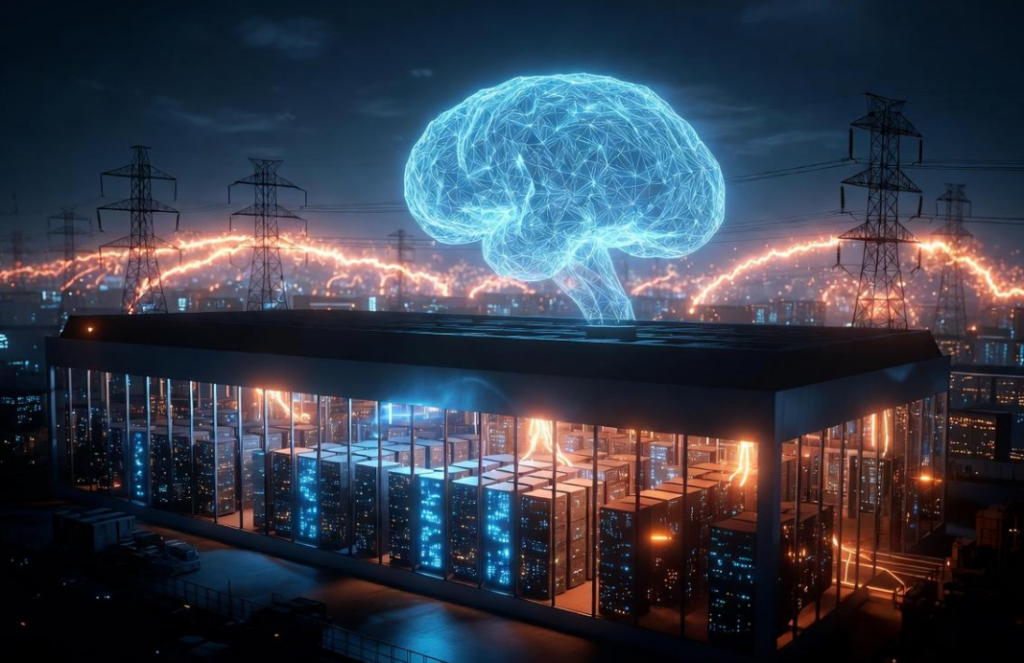
Artificial intelligence is transforming the future, from global AI safety concerns and next-generation gaming to autonomous defense technology.
Meta Description: AI searches are surging worldwide. Explore Geoffrey Hinton’s AI blackout warning, the possibility of AI-powered GTA 6 PC porting, and Harmattan AI’s autonomous defense technology.
Focus Keyword: AI News
Related Keywords: Geoffrey Hinton AI Warning, AI Blackout, GTA 6 Generative AI, AI Game Porting, Harmattan AI, Artificial Intelligence Trends
AI Is Advancing Faster Than We Expected: Geoffrey Hinton’s Blackout Warning, GTA 6 AI Porting, and the Rise of Harmattan AI
Something interesting is happening in the world of artificial intelligence, and the latest Google Trends data suggests that people are paying closer attention than ever.
When I looked at today’s rising AI-related searches, one thing immediately caught my attention. The topics were surprisingly different. Some people were searching for warnings about artificial intelligence potentially disrupting critical infrastructure. Others were interested in whether AI could help bring Grand Theft Auto 6 to PC. Meanwhile, a relatively specialized defense technology company called Harmattan AI was also attracting growing attention.
What surprised me most was how these three stories represent completely different sides of the same technology.
AI is no longer just about chatbots answering questions or generating pictures. It is becoming part of conversations about global security, entertainment, software development, and the future of human society.
Here are the three AI developments that stood out in the latest Google Trends snapshot.
Today’s Google Trends: Three AI Searches Experiencing Massive Growth
The supplied Google Trends data shows three particularly interesting rising search queries.
| Rank | Rising Search Query | Search Growth |
|---|---|---|
| 1 | Geoffrey Hinton AI Blackout Warning | +4,000% |
| 2 | GTA 6 Generative AI Porting | +2,450% |
| 3 | Harmattan AI | +750% |
These percentages represent rising search interest reported in the supplied Trends snapshot. They should not be interpreted as actual search volumes or proof that these topics are equally popular worldwide.
However, the combination is fascinating. One topic concerns the potential risks of advanced AI, another explores its ability to transform software development, and the third involves autonomous defense technology.
1. Geoffrey Hinton’s AI Blackout Warning: Could Artificial Intelligence Become a Global Risk?
Google Trends search growth: +4,000%
One of the most striking search terms is “Geoffrey Hinton AI blackout warning.”
Geoffrey Hinton is widely recognized as one of the pioneers of modern artificial intelligence research. He received the 2024 Nobel Prize in Physics for discoveries and inventions that enabled machine learning with artificial neural networks.
Recently, Hinton made headlines after warning that humanity could experience a serious AI-related crisis as early as this year or next year.
In an interview published by The Guardian on November 3, 2026, Hinton discussed the possibility that AI could contribute to major disruptions involving electricity infrastructure or financial systems.
He even suggested that a major incident could be necessary before governments and technology companies fully recognize the seriousness of the risks.
What caught my attention most was not simply the possibility of an AI-related blackout. It was the fact that this warning came from someone who helped build the foundations of modern AI.
Think about that for a moment.
The people who understand this technology at the deepest level are also among those asking the world to take its potential consequences seriously.
How Could AI Affect Electricity and Financial Systems?
Modern society depends heavily on interconnected digital infrastructure.
Electricity networks, banking systems, telecommunications, transportation, and government services all rely on increasingly sophisticated software and automated systems.
As AI becomes more capable, it could potentially be used to identify vulnerabilities, automate cyberattacks, or exploit weaknesses in systems that were not designed to handle advanced autonomous technologies.
There is an important distinction here: Hinton’s warning is a prediction about potential risks, not evidence that an AI-caused blackout is currently scheduled or inevitable.
Nevertheless, the underlying concern deserves attention.
Consider these three areas:
- Electricity infrastructure: Critical power systems could face new cybersecurity challenges as attackers gain access to more sophisticated AI tools.
- Financial networks: Automated attacks, fraud, and manipulation could become more difficult to detect and contain.
- Employment and inequality: AI could significantly change the types of work people perform and how businesses organize their workforce.
Hinton has also argued for stronger independent testing of advanced AI models before they are released.
I believe this is an important part of the discussion. Developing more powerful AI systems is one challenge. Making sure those systems remain safe, predictable, and accountable is another.
For anyone following artificial intelligence stocks and technology investments, AI safety is becoming an issue worth watching alongside computing power and commercial growth.
2. GTA 6 and Generative AI: Could AI Change How Video Games Are Ported?
Google Trends search growth: +2,450%
The second search term surprised me for a completely different reason.
“GTA 6 generative AI porting” connects one of the world’s most anticipated video games with a rapidly developing area of AI-assisted software engineering.
Grand Theft Auto 6 is expected to launch on November 19, 2026, for PlayStation 5 and Xbox Series X|S.
Traditionally, major Rockstar releases have arrived on consoles before eventually making their way to PC. This gap can leave PC gamers waiting months or even years.
But could AI change that process?
Could AI Help Convert a Console Game Into a PC Version?
According to an Ars Technica report published on November 6, former Rockstar technical director Obbe Vermeij discussed the possibility that AI-assisted reverse engineering could make unofficial PC ports easier to develop.
The basic idea is interesting.
Modern AI coding tools can help developers analyze software, understand unfamiliar code, and automate certain programming tasks. In theory, these capabilities could reduce some of the effort traditionally required to adapt software for another platform.
Vermeij suggested that the possibility of AI-assisted unofficial porting could create additional pressure on Rockstar to reconsider the timing of its official PC release.
However, there is an important limitation: there is currently no verified working unofficial AI-generated GTA 6 PC port, and Rockstar has not announced an official PC release date.
What I find particularly interesting is that AI could potentially change the economics of software development, even for companies with enormous development budgets.
In the past, converting a technically complex game between platforms required substantial engineering resources. If AI tools make parts of that process faster, the competitive landscape could look very different.
Does GTA 6 Actually Use Generative AI?
This is another question worth clarifying.
Take-Two Interactive CEO Strauss Zelnick previously stated that generative AI has no role in what Rockstar Games is building for GTA 6, describing its game worlds as handcrafted.
That distinction is important. AI-assisted tools being used by third-party developers to analyze or adapt software are not the same thing as Rockstar using generative AI to create the game itself.
It also raises an interesting question about intellectual property. Even if AI makes software adaptation easier, that does not automatically make an unofficial port legal or authorized.
For the gaming industry, the next few years could bring major discussions about copyright, development costs, platform exclusivity, and the role of AI-generated code.
3. Harmattan AI: The Growing Role of Artificial Intelligence in Autonomous Defense
Google Trends search growth: +750%
The third rising search query is Harmattan AI.
Unlike the first two topics, this one moves beyond general AI discussions and into the world of defense technology.
Harmattan AI is a defense technology company focused on autonomous systems, including technologies designed to support surveillance, threat detection, and air defense operations.
What makes the company particularly interesting is its focus on combining multiple technologies into coordinated systems rather than treating AI as an isolated software feature.
A Major Development: Harmattan AI and Qatar’s Barzan Holdings
On November 6, 2026, Harmattan AI announced a strategic partnership with Barzan Holdings, Qatar’s defense and national security organization.
The memorandum of understanding covers cooperation on autonomous very short-range air defense capabilities and other autonomous defense solutions.
One of the systems mentioned in the announcement is GOBI TEMPEST, which is designed to counter Group 2 and Group 3 aerial threats.
The system brings together technologies such as:
- Radar and detection capabilities.
- Electro-optical sensors.
- Command and control systems.
- Autonomous interception capabilities.
- Mission coordination technology.
What makes this development particularly significant is the move toward integrating detection, decision support, and operational response into a coordinated architecture.
Rather than simply analyzing information, autonomous systems can potentially perform increasingly complex tasks with reduced human intervention.
Of course, this also raises important questions about human oversight, accountability, reliability, and the appropriate limits of autonomous military technology.
Why Is Defense AI Becoming an Important Technology Sector?
Artificial intelligence is increasingly being explored in areas where large amounts of information must be processed quickly.
Defense is one example, but similar technological principles are also relevant to aviation, logistics, industrial monitoring, robotics, and emergency response.
From my perspective, the bigger story is that AI is moving from digital applications into physical environments.
We are beginning to see AI systems interact with sensors, machines, vehicles, and infrastructure rather than simply producing information on a computer screen.
That transition could create significant opportunities for companies developing robotics, autonomous navigation, computer vision, and real-time decision-support systems.
What Do These Three AI Trends Have in Common?
At first glance, Geoffrey Hinton, GTA 6, and Harmattan AI seem to have very little in common.
However, when I look at these three stories together, I see a much bigger pattern.
| AI Development | What It Represents | What to Watch |
|---|---|---|
| Geoffrey Hinton | AI safety and global risks | Regulation and independent testing |
| GTA 6 AI Porting | AI-assisted software engineering | Development speed and copyright |
| Harmattan AI | Autonomous physical systems | Reliability and human oversight |
The common theme is that artificial intelligence is becoming more influential in the real world.
It is affecting how companies develop products, how governments think about national security, and how society prepares for technological risks.
And perhaps the most important change is that AI is no longer just a tool used by technology companies. It is becoming a strategic consideration for almost every major industry.
Could AI Become One of the Most Important Investment Themes of the Next Decade?
There is another side to these developments that investors may want to consider.
Much of the AI investment conversation has traditionally focused on semiconductor manufacturers, cloud computing companies, and large technology platforms.
Those areas remain important, but the three trends discussed here highlight other potential areas of opportunity.
First: AI infrastructure and cybersecurity. As companies become more dependent on AI, protecting digital infrastructure and critical systems could become increasingly important.
Second: AI-powered software development. Tools that help developers write, test, analyze, and maintain complex software could change productivity across the technology sector.
Third: Autonomous systems and robotics. AI applications involving sensors, machines, vehicles, and industrial automation could expand beyond traditional software markets.
However, growing interest does not automatically translate into profitable investments. Companies must demonstrate real commercial demand, sustainable revenue, and the ability to manage technological and regulatory risks.
I would also be careful about treating a sudden increase in Google searches as a signal to buy a particular stock.
Search interest can help identify emerging topics, but it does not predict company earnings or future share prices.
What Should We Watch Next in Artificial Intelligence?
There are several developments I would keep an eye on over the coming weeks and months.
- AI safety: Will governments introduce stronger requirements for independent testing of advanced AI systems?
- Gaming and software: Will AI-assisted reverse engineering become practical enough to change traditional software development and distribution?
- Defense technology: Will partnerships like Harmattan AI and Barzan Holdings lead to broader commercial deployment of autonomous systems?
- AI infrastructure: Will demand for computing power, electricity, data centers, and cybersecurity continue to grow?
One thing I have learned from following AI developments is that the most important technology stories are not always the ones that receive the most attention at first.
Sometimes, a relatively small announcement can reveal a much larger shift in how an entire industry operates.
That is why I find today’s Google Trends results particularly interesting. They offer a glimpse into three very different conversations that may shape the future of artificial intelligence.
Frequently Asked Questions About Today’s AI Trends
Why is Geoffrey Hinton’s AI blackout warning trending?
Geoffrey Hinton recently warned that artificial intelligence could contribute to serious disruptions involving electricity or financial systems. His comments have attracted attention because of his reputation as one of the pioneers of modern AI research.
Could generative AI create a PC version of GTA 6?
AI-assisted reverse engineering could potentially help developers analyze and adapt complex software. A former Rockstar technical director has discussed the possibility of unofficial AI-assisted GTA 6 PC porting. However, there is currently no verified working unofficial port, and Rockstar has not confirmed a PC release date.
What is Harmattan AI?
Harmattan AI is a defense technology company developing autonomous systems and related technologies. Its work includes air defense, surveillance, and mission coordination capabilities.
Why is AI becoming important in defense technology?
AI can help process information from multiple sensors, identify potential threats, and coordinate complex operations. However, reliability, human oversight, and accountability remain essential considerations.
Can Google Trends predict the next successful AI stock?
No. Google Trends measures relative search interest rather than investment performance. It can help identify emerging public interest, but investors should also examine company financial statements, revenue growth, competition, and business fundamentals.
Final Thoughts: AI Is Becoming Much Bigger Than We Imagined
Looking at today’s rising search terms, I think we are seeing an interesting moment in the development of artificial intelligence.
Geoffrey Hinton’s warning reminds us that technological progress must be accompanied by responsibility. The GTA 6 story shows how AI could challenge traditional software development. Harmattan AI demonstrates how autonomous technologies are expanding into the physical world.
What surprised me most is how quickly the conversation around AI is changing.
Only a few years ago, much of the public discussion focused on whether AI could write a paragraph, create an image, or answer a question.
Today, we are discussing AI’s potential impact on electricity networks, global security, complex software, and entire industries.
I believe the most important question is no longer simply how powerful AI can become.
It is how responsibly we can use that power, who will benefit from it, and how society will adapt to the changes ahead.
And this is a story that is only beginning.
A Different Kind of Connection in an Increasingly AI-Driven World
As technology continues to change the way we work, communicate, and live, I think there is something else worth remembering.
Technology can make our lives more convenient, but meaningful human connections remain important.
Finding someone who shares your values, understands your personality, and has a similar outlook on life is still something that technology cannot simply replace.
That is one reason I find the idea behind Simkunginyeon interesting.
Instead of focusing only on superficial profile photos and quick swipes, Simkunginyeon brings together MBTI personality insights and traditional Korean Four Pillars of Destiny (Saju) compatibility to help people explore potentially meaningful relationships.
If you are curious about a different approach to meeting someone, take a look.
Go Beyond Ordinary Dating
Discover a different way to explore compatibility through MBTI, Saju, and shared values. Maybe your next meaningful connection is closer than you think.
MBTI Personality · Saju Compatibility · Meaningful Connections
Sources and Further Reading
- Google Trends – Understanding the Data
- The Guardian – Geoffrey Hinton’s Warning About the Future of AI (November 3, 2026)
- Ars Technica – Could Potential AI Clones of GTA VI Force a Quicker Official Port? (November 6, 2026)
- Harmattan AI – Strategic Partnership with Barzan Holdings (November 6, 2026)
- CVS Health – Official Website
Disclaimer: This article is for informational and educational purposes only. It does not constitute financial, investment, or security advice. Google Trends search growth reflects relative interest in the supplied snapshot and does not establish causation or predict future outcomes.